What the type of cannabis grow lights?
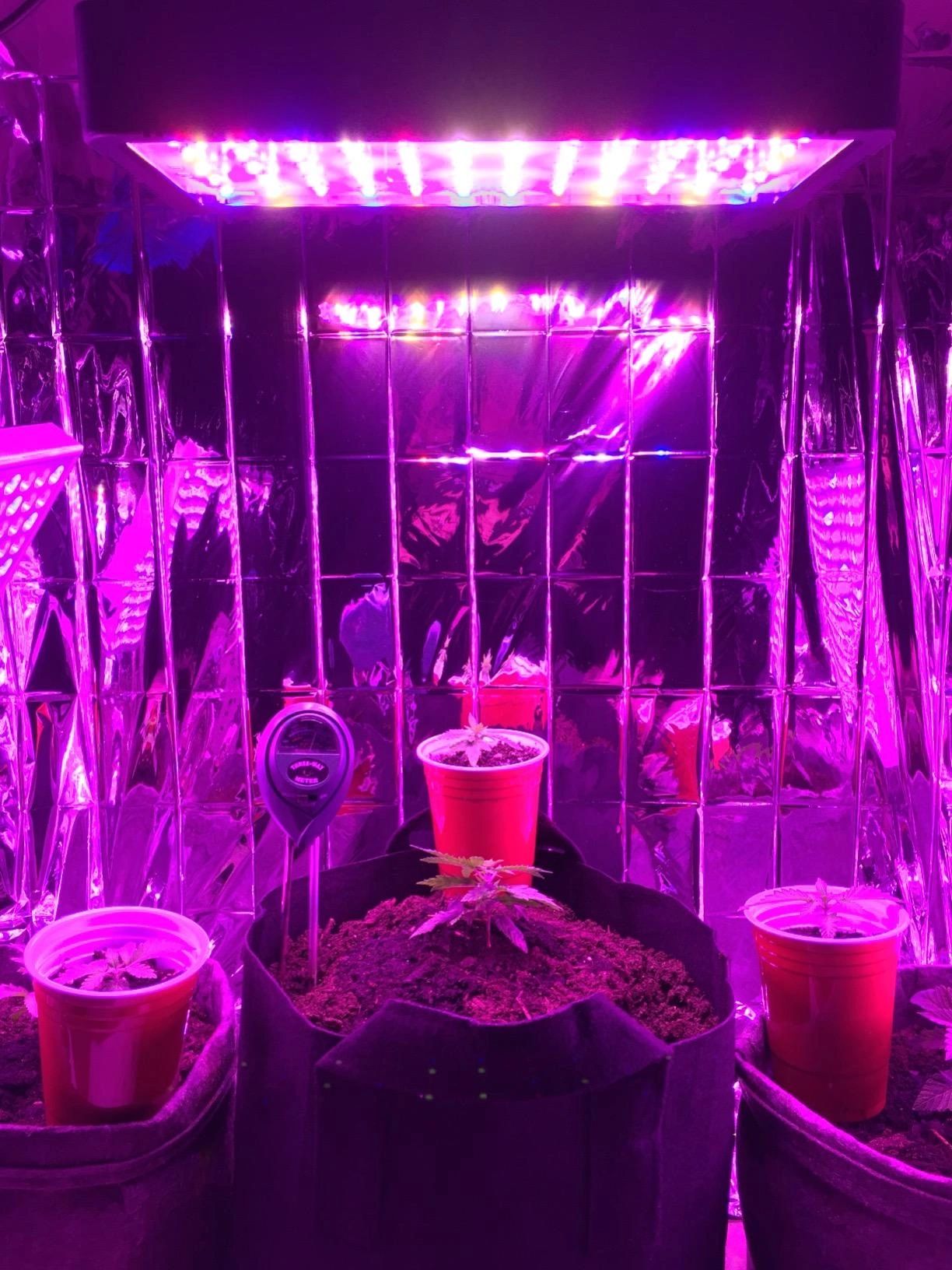
How do we light our cannabis growing space?
When we decide to set up an indoor cannabis grow for personal use at home, there are many factors to take into account if we want to get the best results, but one of the most important to consider is the type of light and its power consumption.
When deciding on the type of light to use, we must keep in mind that each technology has its different advantages and disadvantages with respect to growing cannabis. Certain types of bulbs will offer the best yield (lumen per watt) but at the same time they are a considerable heat source that can cause problems to many growers, especially those that live in particularly warm climates or are only able to grow cannabis in small spaces.
On the contrary, other types of illumination emit almost no heat at all, although often the high price of this kind of lighting, combined with its lower effectiveness when compared to other systems, combine to make them less popular. They are, however, indispensable to the many indoor growers that can only cultivate cannabis successfully thanks to the low heat emission of these lights.
The choice of lighting systems for indoor growing mainly depends on the stage of life that the plant finds itself in (rooting/seedling, vegetative growth or flowering), which will dictate the light spectrum and intensity that is required. As we've mentioned, the available grow space also has an influence on this decision because certain lamps will emit too much heat to be used in reduced areas, as is often the case with HPS or MH lights.
Red spectrum lights are used for flowering cannabis plants, as this is the colour range that best imitates the spectrum of sunlight during the autumn months, when outdoor cannabis is naturally in flower. In this case the most commonly used are HPS lamps, increasingly followed by LED systems due to their good results, lower energy consumption and most significantly, lower heat emission, which is the main problem with high pressure sodium systems (HPS).
On the contrary, most green light is reflected by the leaves and therefore has no effect on cannabis plants, making it the perfect colour spectrum to choose when growers want to work on their flowering plants with the lights off, without disrupting the dark period and stressing them.
The correct light spectrum for cannabis plants
When it comes to the to the colour temperature of the light spectrum, cannabis plants will benefit from receiving blue light (450-500nm) during their vegetative growth stage, and red light (610-750nm) during the flowering period.
When rooting clones and in the first stage of starting seedlings, many growers use simple fluorescent tubes or CFL lightbulbs with a blue spectrum. For plant growth and pre-flowering, many will begin to use lights with the same spectrum, but with greater power, such as Metal Halide lamps. This encourages the structure of the plant become stronger and hardier, preparing her for abundant flowering.
Type Of Cannabis Grow Lights.
Nowadays, there are many grow lights available for sale, but collectively they all can be categorized major three categories.
Each type of lights has its pros and cons.
You remember my initial statement? That selecting best grow led lights shouldn’t be expensive.
Yeah, it’s right time to prove my words.
Here, our primary focus would be on two factors.
1). Lesser electricity consumption as it’s going to be a recurring cost for us.
2). Better light, And higher yields.
So, by keeping this two primary things in mind, it’ll become easy for us to find out best grow led lights for our cannabis plants.
You might be thinking that this guy is going out of track. Then, I’m not.
Really, before making a wise decision one needs to understand all aspects of their choice.
Now, without wasting time let’s go through categories of best grow lights on the market.
Pleasant lighting experience and lower electricity cost that’s the reason behind its success and demand as best grow lights on the market.
Yeah, this type of light is in demand nowadays.
And, its design factors could also be one of the reasons behind its demand though people won’t consider size and shapes when it comes to yield.
This type of lights can be categorized further into two parts.
i) CFL grow lights.
CFLs means compact fluorescent light. As the name suggests, they are small sized twisted light bulbs.
But, They generate a great spectrum for your cannabis growth.
This light is best suited for those people who’re having limited space to grow their plants. It’s usually the first choice of those people who are growing just one or two individual plants as it doesn’t need much space and can be fitted into smaller compartment too.
ii) T5 grow lights.
As this light also falls under the category of fluorescent lights its working is same as CFLs. But the noticeable difference is because of its size it can be used for multiple plants too. This lights also generate the great spectrum, but the only difference is in its utilization.
This lights usually needs a supporting panel for its use. Hence, Independent fixture is not possible in case of T5 fluorescents.
T5s can cover larger area and huge number of plants. Say you have three or five plants, then just hang this panel few inches away from your plant and seat back with relaxation.
Yeah definitely, this light will help your tree-plants to survive and sustain better growth.
Now, as we are familiar with both the fluorescent light let’s move forward and take a look at its pros and cons.
Pros of fluorescent lights:
- Comparatively cheaper cost. So, you can consider it as best cheap grow light.
- Full spectrum light for plants better growth and health.
- If appropriately used then excessive heat could be avoided.
(Tip: – Don’t fit so many lights in the small area.) - Around 10000 hours of extended lifespan.
- Lesser electricity consumption.
- If we consider just CFLs, then they can be fitted into standard sockets resulting in lower cost for external fixtures.
- It’s an Excellent choice for individual and shorter plant.
Cons of fluorescent lights:
- Comparatively lesser yields per watt of electricity. Fluorescent usually gives yields of 0.25 gram per watt of electricity, while other grow lights on the market could give you 0.5 to 1 gram of yield per watt of power.
- It’s not a wise choice for taller plants in flowering stage.
- If we consider just T5s, then they need external panel for its fixture resulting into higher cost for maintenance.
2. HID Grow Lights:
Basically, HID is abbreviation used for High-Intensity Discharge lights. They are more powerful then fluorescent lights.
Specific formation of expansive glass bulbs are controlling this type of lights, and that could be one of the reasons behind its highly proficient output.
Tree plants receive more amount of light because of its typical structure. Yeah, some light bulbs are screwed inside a reflector or hood which results in the multiplied amount of light, and that’s the reason behind its efficiency.
HIDs are incredibly famous among bud grower lobby. But, this kind of lights generates tremendous heat, and hence they need an allocated exhaust to vent out excessive heat. Initially you’ll get best cheap grow light in this category but later on its power draw makes it to be costlier for long run.
Majorly three type of HIDs are available on the market.
This type of HIDs is best suitable for vegetative phase of any plant. Metal Halides forms somewhat bluish light. And, bluish light is recommended for small plants in the vegetative stage.
Though it’s not compulsory to use this light in the vegetative stage, it could be used throughout plant life cycle.
This type of lamp is designed for the growth period due to its 4000k light spectrum, which is a whiter, colder color. These lamps cause cannabis plants to grow much more compact and leafy, growing shorter internodes and thicker branches. They’re perfect for maintaining mother plants and for your plants’ normal growth period.
2). High Pressure Sodium Grow Lights.
As bluish light is an excellent choice for small plants in the vegetative phase, similarly yellow lights are excellent choice for tree plants in the flowering stage.
It’s an excellent choice in the flowering stage because it exceptionally empowers bud growth during this stage.
In Fact, Yellow light spectrum simulates bud growth, and that could be the reason behind its fame.
High pressure sodium lamps are designed for both the growth and flowering periodsbased on their light spectrum. They produce a spectrum lower than 6000k, which is a warm light that’s similar to autumn light, which stimulates plant flowering. When growing using these lights you’ll get the best results if you use a specific bulb for the growth and another for flowering. Their mixed spectrum bulbs are also quite efficient.
3). Ceramic Metal Halide & Light Emitting Ceramic Grow Lights.
CMH grow light or LEC lights are kind of like the evolved version of high pressure discharge lights. These types of lights are known for containing different types of gas than HPS and MH lights, offering better results and more professional yields. They also come with a different thread than other bulbs which is much more secure and connects better. They come in all types of different light spectrums; growth, flowering and mixed spectrums. They hardly generate any heat at all, and they provide a high gram/watt ratio.
As we’ve taken a brief look at all three type of HIDs now let’s talk about its pros and cons.
Pros of HID Grow Lights:
- If considered yield per watt of electricity then this light is more proficient than all other grow lights, As it gives you around 0.5gm/1w of electricity.
- HPS kind of HID grow lights are highly productive and best choice for plants in blooming phase.
- It doesn’t need to change its position, and you can hang it on an appropriate distance from your tree plant throughout its life cycle.
Cons of HID Grow Lights:
- Bulbs used in this kind of lights usually generates extreme heat, Excessive heat can harm plants. And that’s the first reason why people avoid this type of lighting for their indoor gardening.
- HIDs needs some particular setup for ventilation of excessive heat. Usually, people utilize an exhaust fan for ventilation purpose.
- As numerous parts and components are basic requirements, each increasing number of the plant also increases your maintenance cost.
- Even though this type of light gives you good yield per watt of electricity, it just saves electricity bills while increasing other recurring expenses for fixtures.
3). LED Grow Lights
LED is abbreviation used for Light Emitting Diodes. It basically contains two specialized semiconductors that are stuck together when you apply considerable amount of voltage across them they emit light from a process called electromagnetic luminous.
Many good LED grow lights are ruling over the lighting market. There are many reasons behind it.
Let me explain:
If you’re getting more amount of light using less amount of electricity, then would you stop for a second before investing your money in cheap lights which are producing less amount of light using comparatively more amount of power?
Yeah, definitely anyone would think for a moment before making a move.
There are other reasons behind its demand too. Like, traditional lights need to be heated to emit light, and a significant amount of energy is wasted in formal heat. Moreover, materials, as well as plants, suffer at a high temperature. While in case of LED Grow Lights no excessive heat is produced to generate light resulting into saving electricity cost. That’s why many weed cultivators are migrating fro HID to led grow light systems.
Setup of an LED Grow Light is straightforward and feasible. Imagine, you can just hang it over any plant with significant distance and work is done. It doesn’t need any other supporting parts for its working which is indeed less demanding than Other Grow Lights.
LEDs also have great spectrum , so you don’t have to worry about moving it much of the time like other types of lights.
Just, Hang it over your bud plants and enjoy growing.
Now, let’s move forward and be familiar with LEDs pros and cons.
Pros of LED Grow Lights:
- Many good LED grow lights do not need any exhaust to vent out heat and to cool plants individually. Because LEDs run cool as it comes with built-in cooling and it doesn’t demand any cooling device that’s the reason behind its success and demand.
- Smaller sized LEDs could be mounted to the wall without doing anything else. Simply, Hang it over your plant, connect, turn it on, and start growing.
- It’s observation that plants grown under LED lights sustains more healthy survival and produces more resinous buds. Though it’s just an observational result obtained by comparing LED with other types of light and more testing and research in this direction is needed.
- LED grow lights provide better yield per watt of electricity if you compare it with traditional fluorescent.
- Even though it gives you yield of around 0.5 to 0.7gm per watt of electricity which is lower than HIDs, it is a better choice compared to HIDs as it reduces recurring cost of maintenance and other costs for setting up whole lighting thing.
- It helps in boosting your grow cycle. If you’re completing a single grow cycle within six months then with this grow lights it’ll become 5 to 5.5 months with the help of its full spectrum abilities.
Cons of LED Grow Lights:
- Large size LEDs with more than 300W gets heated at longer up time. And that heat needs to be exhausted to avoid damage to your lovely bud plants.
- If considered your coverage area, LEDs needs more heights to cover more area. Small sized LED boards could be kept at a distance of around 18” during buds first phase while it’s recommended to keep it at least 25 to 30” during plants flowering phase.
- If you don’t care about recurring cost, then this lights gives you comparatively smaller yield than HIDs. It’s advised to take a wise move here. No, Nope I won’t decide what you should choose.
- It boosts Harvest cycle too, yeah, with this lights plants get proper nutrition with the help of light energy. And stays healthy for more time, resulting in multiple harvests in a single season with LED Grow lights.


评论
发表评论